
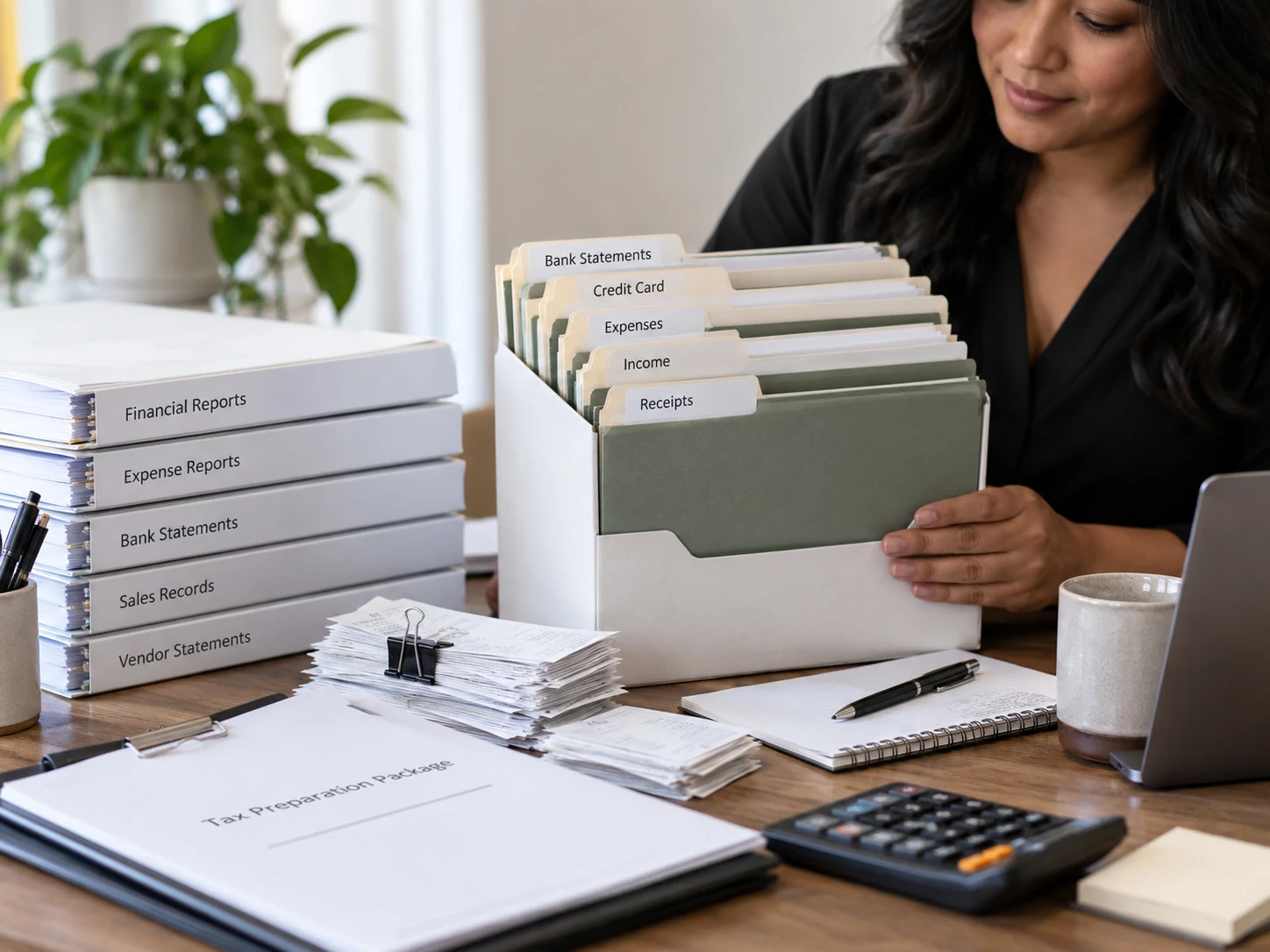
Give Your Tax Preparer an Organized Set of Books
Before you give the books to your tax preparer, the records should be organized, reconciled and supported by documents. Income and expenses should be clearly categorized, balance sheet accounts should have explanations and unresolved questions should be identified. Tax preparation still requires professional judgment beyond bookkeeping completion.
Provide reports built from reviewed records
Prepare a profit and loss statement, balance sheet and transaction detail for the correct year and accounting basis. Reconcile bank and card accounts, compare loan balances with lender records and review transfers and owner transactions. A list of bank deposits alone is not a complete income record, and total withdrawals are not the same as deductible expenses.
Include the schedules that explain unusual items
Gather equipment purchase records, financing details, customer and vendor balances, payroll summaries and inventory information when relevant. Identify major changes in the business, such as new borrowing or a software migration. Clearly list remaining missing documents or transactions whose treatment needs a tax decision rather than hiding them in a general category.
Preserve the handoff and the final adjustments
Agree with the preparer on the required format and secure delivery method. Keep a dated copy of what was provided, then record approved adjustments with supporting instructions. Tax deduction eligibility, depreciation, elections and filing obligations belong with the tax professional. Good bookkeeping gives that professional a coherent starting point and reduces time spent investigating basic record differences before the tax work can begin.