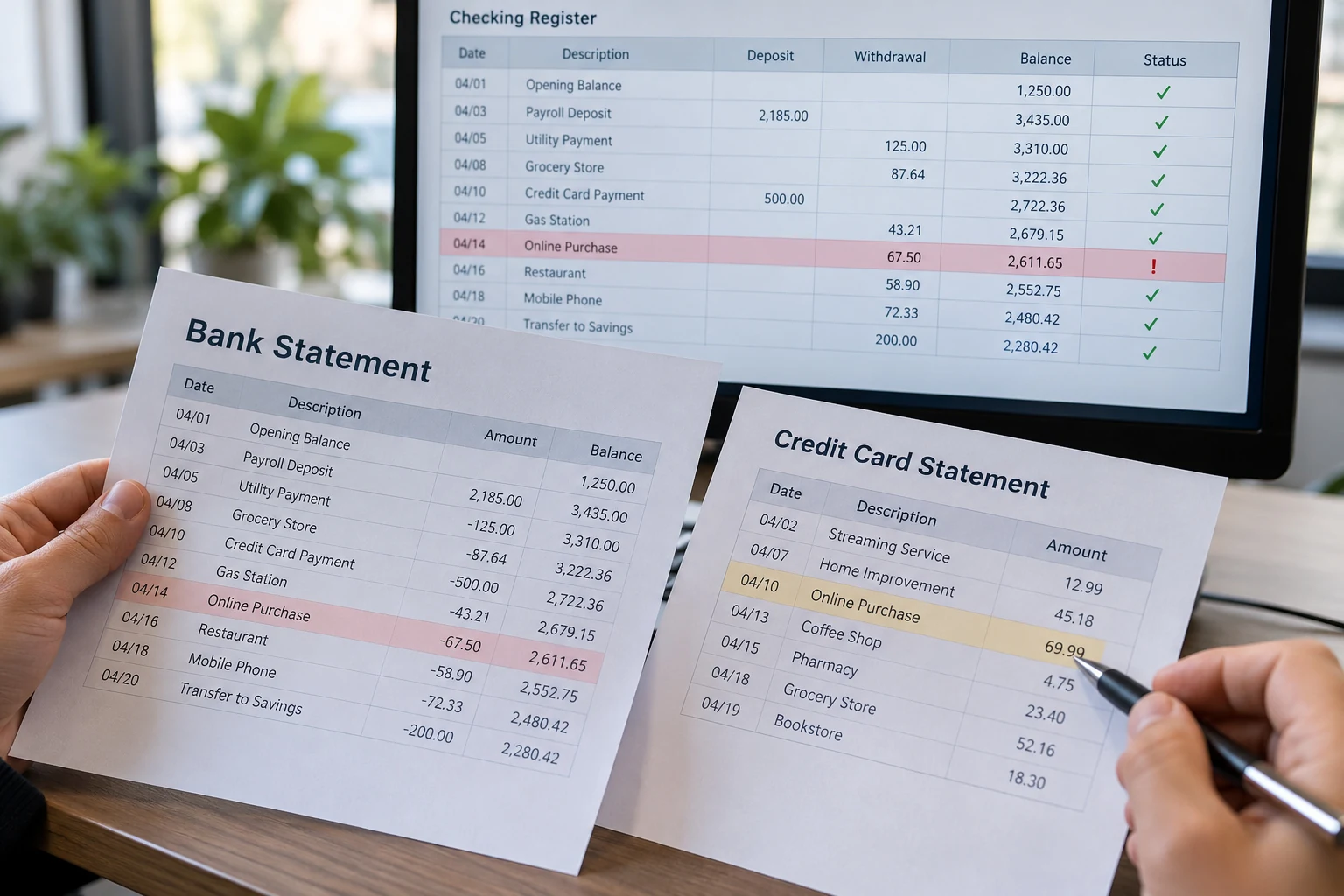
Balancing & Corrections
When the books and the account statements disagree, the difference needs an explanation. Find the missing entries, duplicate activity and posting errors behind the balance.

Balancing & Corrections Scope
Balancing and corrections reviews recorded transactions to determine why an account or report does not agree with reliable supporting information. It can involve correcting duplicate entries, missing payments, misclassified transfers or inaccurate beginning balances. Paper Trail focuses on the reason for a difference so the correction can be understood later.
Balancing & Corrections Services
Account Balances
A checking balance, credit card balance and loan balance each represent something different. Before changing entries, the review identifies the account, the date of the comparison and the source being used to check it. A live bank balance and a statement ending balance may differ simply because they cover different dates.
For an account that previously reconciled, the last successful reconciliation is especially useful. It helps narrow the review to the period when a difference first appeared.
Timing Differences
A payment recorded in the books may not have cleared the bank by the statement date. That does not automatically make the entry wrong. Reconciliation accounts for valid outstanding items while investigating activity that is missing, duplicated or entered for an incorrect amount.
Old outstanding entries deserve additional attention. A check that never cleared, a duplicated deposit or a voided payment can leave a misleading balance if it remains indefinitely. The underlying event needs to be confirmed before the entry is changed.
Transaction Errors
A transfer entered as revenue inflates income. A credit card payment entered as another purchase can overstate expenses. A bill paid through the bank may still appear unpaid if the payment was not connected to the bill. Each situation requires a different correction, even if the owner first notices it as one wrong total.
The review also considers whether a previously reconciled entry was edited or removed. Fixing the current month without addressing an earlier change can leave the original cause in place.
Balance Adjustments
An unexplained adjustment can make a reconciliation screen reach zero without showing what actually happened. The stronger approach is to trace the difference to its cause and record the supported correction. Where an adjustment is appropriate, its purpose and supporting information should be documented.
Illustrative example: a $250 supplier payment appears twice after a manual entry and a bank import. Confirming that the statement contains one payment provides a basis to correct the duplicate. Adding unrelated income to offset the difference would leave both the expense and income records misleading.
Completed Periods
Corrections should be made with awareness of closed periods, earlier accountant adjustments and filed returns. An old entry might be part of a larger year end adjustment, so it should not be deleted solely because its description is unfamiliar. A record of the changes helps the business understand their effect on earlier reports.
Where the available information cannot establish the correct treatment, the item should be raised with the owner or accountant. A clear explanation of the unresolved balance is more useful than unsupported certainty.
Keep the earlier reconciliation report and the statement used to complete it. If a later correction changes that period, retain the connection between the original entry, the adjustment and the updated balance.
Review connected accounts as well. Moving a payment between bank accounts can affect two reconciliations, so closing one difference does not establish that the other account is correct.
Corrected Reports
The agreed output should connect the repaired account to the supporting statement or schedule for the period reviewed. Depending on the issue, it can include completed reconciliations, corrected transaction links, updated reports and a summary of remaining exceptions. The scope should also make clear whether only one account or several connected accounts are being addressed.
If the same error keeps returning, the transaction workflow deserves attention too. Consistent handling of transfers, bills and downloaded payments helps prevent another correction project from building behind the scenes.
A correction can affect more than the account where the problem first appeared. A payment assigned to the wrong bank account can leave one account overstated and another understated. Paper Trail follows the related entries so the correction addresses the connected records and the resulting review explains the evidence supporting the change.