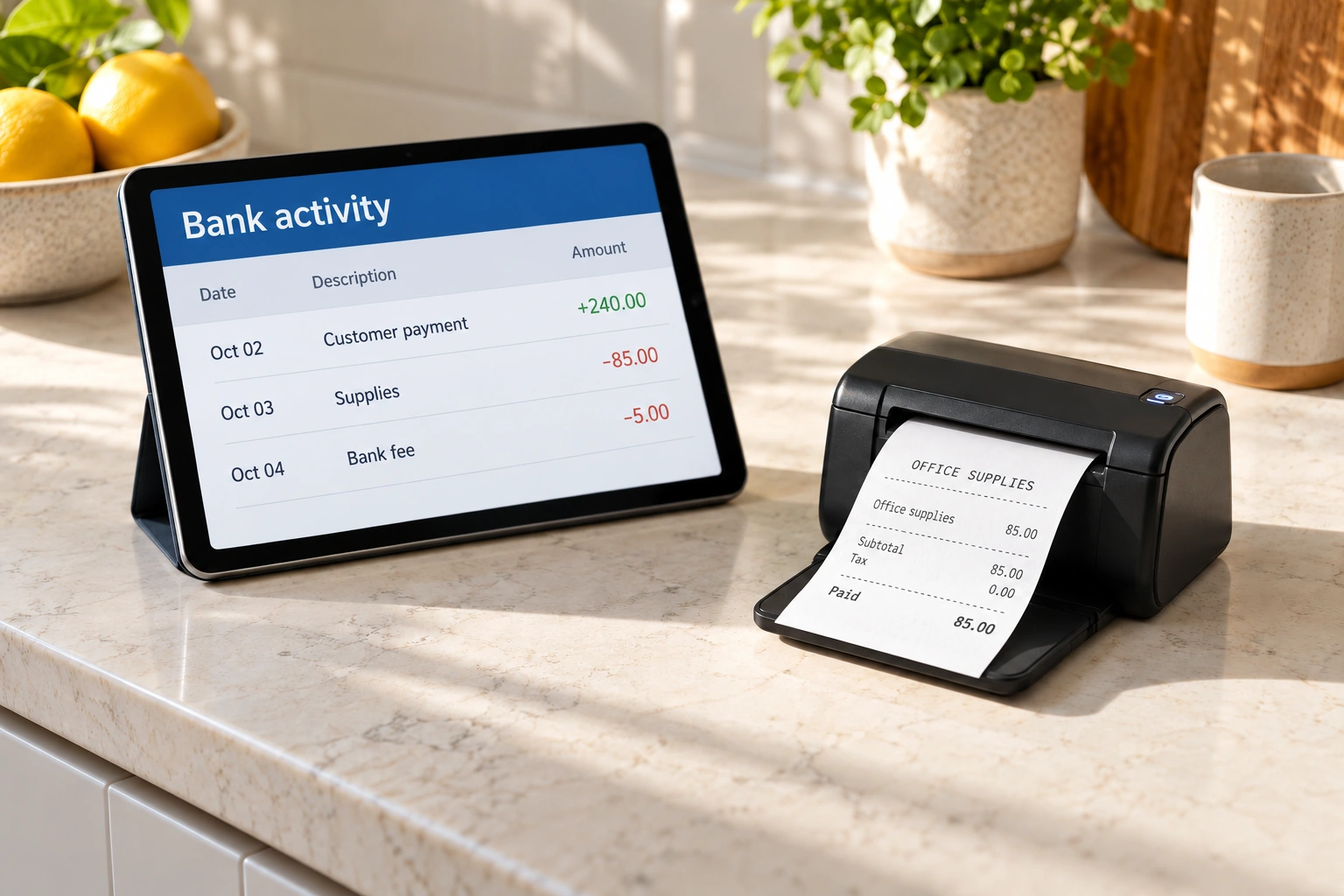
Bank & Credit Card Balancing
A downloaded transaction is only one part of the record. Match the account activity to its statement, explain outstanding items and catch differences before they carry forward.

Bank & Credit Card Balancing Scope
Bank and credit card balancing, commonly called reconciliation, compares the transactions recorded in the books with the statement for a particular account and period. It accounts for valid timing differences and identifies errors needing correction. Paper Trail uses that review to support the balances behind the business reports.
Bank & Credit Card Balancing Services
Statements and Opening Balances
The reconciliation needs the correct account, statement dates and beginning and ending balances. A live online balance can include newer activity and should not be substituted for a statement ending balance from an earlier date. Starting with the wrong period makes ordinary timing differences look like errors.
If the beginning balance no longer agrees with the prior reconciliation, the earlier records need review. A changed or removed transaction may explain the difference, and it should be understood before the current period is completed.
Cleared Transactions
The review checks recorded deposits, purchases, withdrawals, fees and payments against the statement. Activity that appears on the statement but not in the books needs investigation. Entries in the books that have not cleared may be legitimate outstanding items, or they may represent duplicates and recording mistakes.
An outstanding item needs enough context to make sense. A recent check may simply be waiting to clear, while an old deposit that never reached the account may require a closer look.
Credit Card Accounts
A business credit card has purchases, credits, fees, interest and payments that should be reviewed against the card statement. Reconciling only the checking account does not establish that the card purchases are complete or correctly recorded. Each account provides a different part of the transaction trail.
The payment from checking to the card should connect the two accounts. It should not repeat the individual purchases as another expense. Otherwise, cash may reconcile while the profit and loss report still overstates spending.
Reconciliation Example
Illustrative example: a business card statement shows a $90 annual fee, but the fee never appeared in the imported transactions. The reconciliation identifies a difference that can be traced to the statement. Recording the supported fee resolves the omission and gives the expense its proper place.
In another situation, the same $90 difference could come from a duplicate payment or an incorrect amount. The size of the difference alone does not determine the correction. The supporting activity does.
Account Review
A reconciliation is strongest when the selected activity explains the statement balance and the remaining outstanding entries are reasonable. Adding an unexplained adjustment just to reach zero can leave the records misleading. The review should retain the reason for any correction and identify items still requiring confirmation.
Reconciliation also has a specific purpose. It does not establish whether every purchase was necessary, whether every expense is deductible or whether an entire business is free of error. Categorization and supporting document review address other parts of the bookkeeping process.
Maintain an account list that includes inactive accounts, replacement cards and accounts with only occasional activity. Keep each statement and its ending balance connected to the correct account, rather than treating a quiet account as one that no longer needs review.
Follow transfers through both sides of the records. A payment from checking to a business card should agree with the corresponding credit on the card account. Different posting dates can explain timing, but they should not hide an amount that never arrived.
For an unresolved difference, preserve the statement line, bookkeeping entry and the question still open. This makes the next review specific and allows a later correction to be traced without reopening unrelated transactions or losing the earlier reconciliation evidence.
Reconciliation Records
Completed reconciliation information provides a reference for the following period and for anyone reviewing the accounts later. The agreed scope should specify the accounts covered, the frequency of the work and how exceptions will be communicated. A newly opened or closed account should be included when its activity affects the period.
The first description can be simple: how many bank and card accounts the business uses, whether they have been reconciled before and what currently does not match. Statements and detailed transaction records can follow through the agreed secure method once the work is defined.
Each statement period needs its own review, including activity still outstanding at the closing date. An uncleared transaction is different from one entered twice or assigned to the wrong account. Paper Trail checks those differences against the available records and documents unresolved items, giving a completed reconciliation an explanation behind the matching totals.
When a business uses multiple bank accounts and cards, each account needs a complete statement history and a clear reconciliation status. Transfers should connect the correct accounts without creating additional sales or expenses. A shared account list and record of outstanding differences help an owner or internal team see which periods are complete and where supporting information is still needed.