
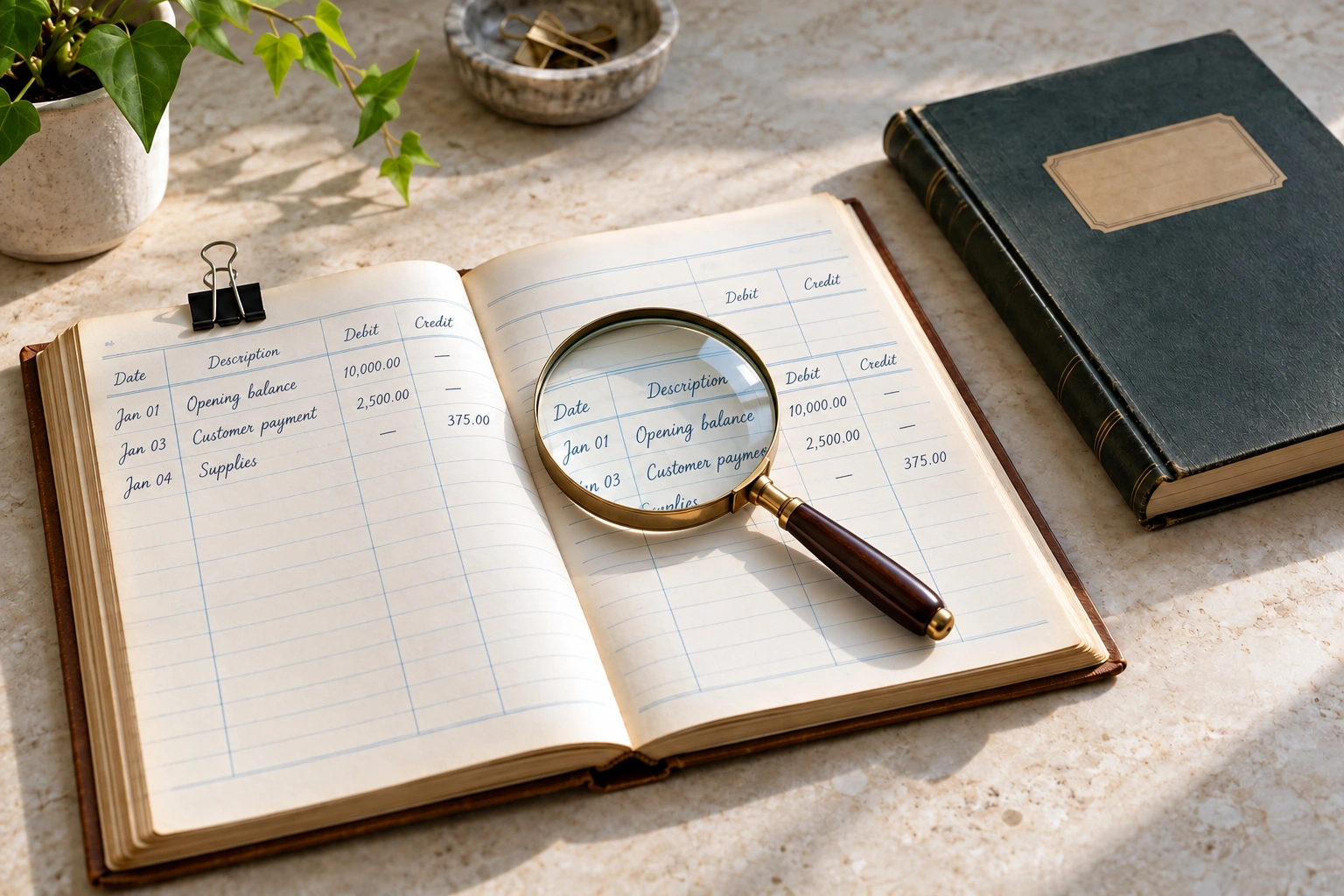
Check the Evidence Before Changing an Opening Balance
Before changing an opening balance, identify where it came from and why it appears wrong. An opening balance connects earlier activity with the period you are reviewing. Changing it without evidence can hide an old error and make current reports look correct while leaving the history inconsistent.
Find the earliest reliable reference point
Compare the opening figure with the prior closing statement, reconciliation report and final balance sheet. If the business changed software, review the migration date and transferred balances. A bank feed that started partway through a period can also create confusion between the actual beginning balance and the first downloaded balance.
Check for transactions that explain the difference
Outstanding checks, deposits in transit, deleted entries and duplicate imports can all make an opening figure seem incorrect. Review the account history before replacing the balance. The difference may belong to a specific transaction rather than the opening entry itself. Confirm that you are comparing the same account, reporting basis and date.
Consider the impact on closed periods
If the opening amount came from an already filed year or approved financial statements, coordinate any correction with the responsible accountant or tax preparer. Document the evidence and the reason for the adjustment. Reconcile the affected periods afterward and verify related equity or liability accounts. An opening balance correction should restore the connection to supported historical records, not serve as a plug for a difference nobody has investigated.