
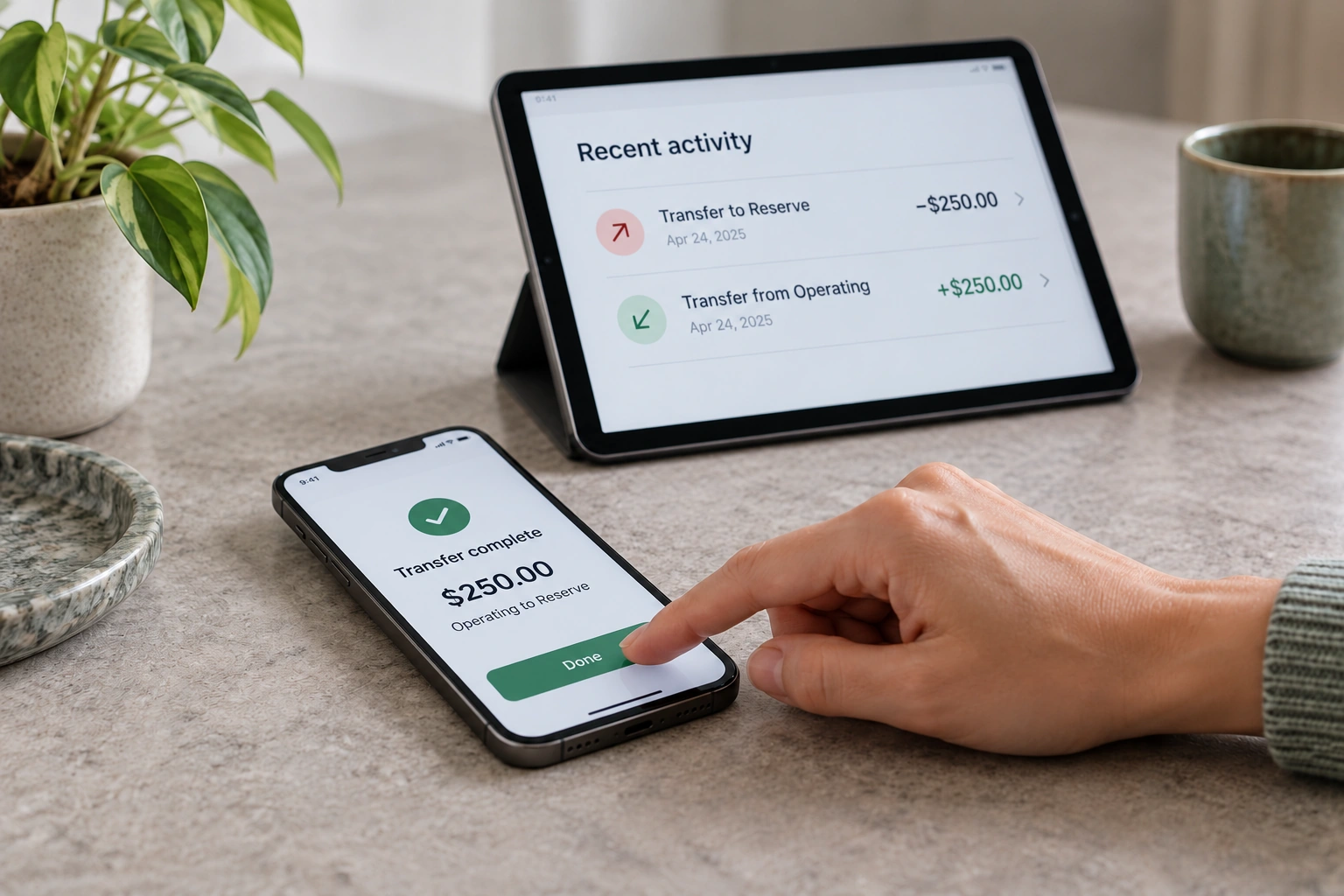
Keep Transfers Out of Your Expense Totals
Transfers can appear as expenses when imported bank activity is categorized as a purchase instead of movement between accounts. A transfer between accounts belonging to the same business generally moves an asset balance, without creating sales revenue or an operating expense. Both sides need to be matched and reviewed.
Identify the source and destination
Compare the amount and timing in the sending and receiving accounts. A transfer may clear on different dates, and a separate fee may explain a small difference. Confirm that both accounts belong to the same business. Money sent to an owner or another legal entity may require different treatment and should not automatically be labeled an internal transfer.
Avoid adding both sides as new activity
If the withdrawal is entered as an expense and the deposit as income, the books may overstate both while the net profit appears unchanged. This still distorts revenue, expense ratios and management decisions. Match the transaction to the proper transfer record and check for an entry already created by an automated rule or manual posting.
Distinguish card and loan payments
A credit card payment generally reduces the card liability because the purchases were recorded separately. A loan payment may include principal, interest and fees with different treatment. Review the supporting statements rather than treating every account to account payment identically. Once corrected, reconcile the affected accounts and inspect the profit and loss report to confirm that only genuine income and expenses remain.