
Documents to Prepare Before Hiring a Bookkeeper
Prepare the name of your bookkeeping software, a list of business accounts, the last completed month and the problems you want solved. Note any upcoming tax, financing or reporting deadline and which records are available. You do not need to repair the books yourself before discussing the work.
Describe how money moves through the business
Identify the products or services you sell, how customers pay and which accounts you use for expenses. Note payment processors, cash sales, customer invoicing, inventory or loans when applicable. The number of accounts matters, but the relationships between them often explain the real complexity.
Identify the last trustworthy reporting period
Gather recent financial reports, reconciliation records and an approximate count of unfinished months. If you are unsure whether a month was completed, say so. List known issues such as duplicate entries, mixed personal spending, missing receipts or unexplained balances. These details help separate a repair project from ongoing monthly bookkeeping.
Choose the outcome and clarify responsibilities
Decide whether your immediate need is current records, corrected reports, an organized tax handoff or a recurring process. Note any important deadline and whether a tax preparer is already involved. Before granting access, agree on scope, record ownership, document sharing and who authorizes changes. A clear starting picture allows the service to be planned around your business without requiring you to arrive with accounting expertise or a perfectly organized file.
Start with a document checklist for the agreed period
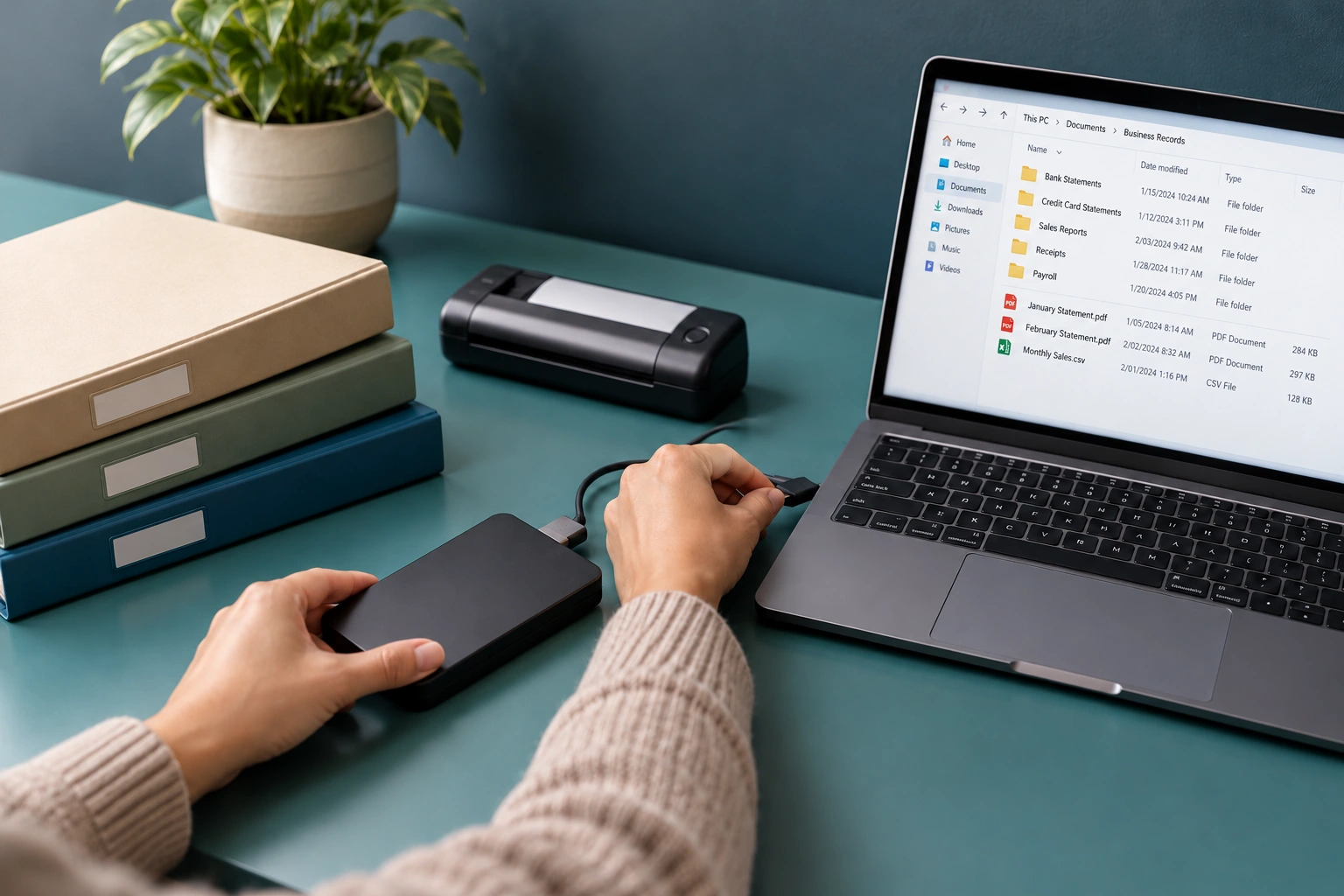
After the scope and document sharing method are agreed, gather the records for the accounts and periods being reviewed. A complete run of statements is more useful than unrelated screenshots. Identify documents that are unavailable so their absence can be considered when planning the work.
- Bank and credit card statements, including closed accounts used during the period.
- Sales and payment processor reports, customer invoices and outstanding balances.
- Supplier bills, receipts and records of payments or credits.
- Loan statements and supporting equipment purchase documents when relevant.
- Existing financial reports and completed reconciliation records.
- Your tax preparer’s request list or approved adjusting entries, when applicable.
Preserve the previous provider’s completed work
If another person maintained the books, identify the last period they completed and arrange an orderly handoff. Retain copies of reports, reconciliations and documented adjustments. Confirm that your business controls its accounting file and that access can be granted through the software’s supported user permissions.
A provider change is a chance to clarify responsibilities, not a reason to discard reliable history. Avoid overlapping entries by agreeing when the former routine ends and the new one begins. Historical corrections may need a separate review if they affect balances or reports already used by your accountant.
Use the first review to define a realistic starting point
An owner does not need to know every accounting term. Describing an unexplained balance, unfinished period or report that never arrives gives the review a practical starting point. The available records then help establish whether the work is a limited correction, a catch up project or ongoing monthly support.
Keep detailed records in the agreed document channel rather than an initial website conversation. The initial scope can be discussed using the software name, approximate number of accounts, period involved and desired outcome. That is enough to begin planning without sharing account credentials or sending financial documents before the process is established.